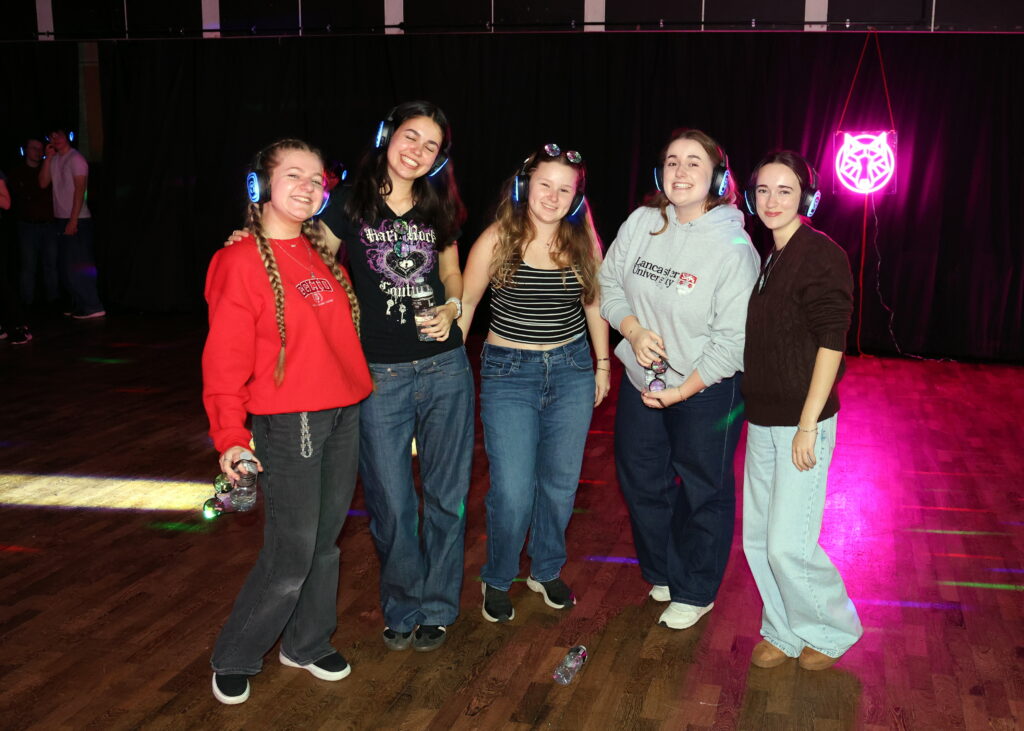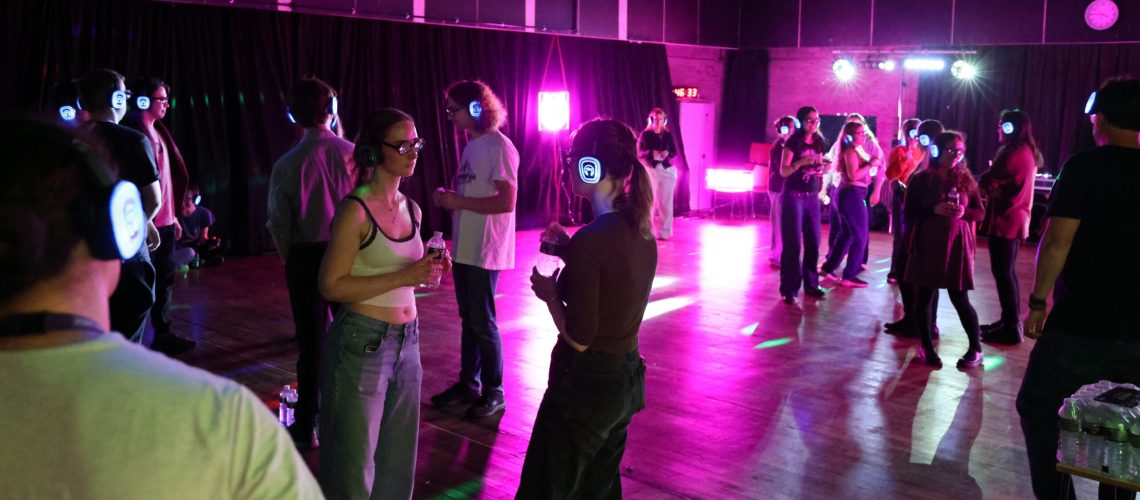
The Lancashire Violence Reduction Network (LVRN) recently teamed up with Lancaster University Students’ Union and CounterSpike to host a ‘silent disco’ style event as part of a campaign to raise awareness about spiking and empower students with the knowledge to protect themselves and others.
The event, on 5th November, at the Minor Hall in Lancaster, gave students a chance to enjoy music, connect with peers, and access important information on how to stay safe on nights out.
Unlike a traditional lecture, the session was designed as a high-impact experience. Students were given headphones on arrival and stepped into a silent disco environment complete with music and light displays. Throughout the event, the music cut away to reveal real-life testimonies from people affected by spiking, alongside clear messaging about what spiking is, the risks involved and how to respond if you or someone you know has been spiked.
Interactive elements, including wearing ‘drunk effect’ goggles and responding to slowed-down music, challenged students’ reactions and highlighted the impact that spiking can have. The aim was not only to educate students on prevention, but also to normalise the conversation around spiking so victims feel able to come forward.
Chief Inspector Gemma Barr, LVRN Operational Lead, said: “While confirmed reports of spiking in Lancashire remain low, we know the concern among students is real. Every student has the right to feel safe on a night out, and we don’t want to wait for problems to happen, prevention and education are two of the most powerful tools we have.”
“Spiking is a crime with devastating consequences, and by tackling it openly we want to normalise the conversation so victims feel able to come forward, knowing it is never their fault and that they will be taken seriously. The Violence Reduction Network exists to prevent harm before it happens, and through events like this we hope we can give students the confidence, and support they need to look out for each other.”
Lancaster University Students’ Union Wellbeing Officer, Leah Buttery added: “Spiking is an ever-growing concern amongst young people, and as cases across the UK are on the rise we have a responsibility equip our students with the knowledge and tools to keep themselves and others safe. No student should have their university experience impacted by fear of a violation of their autonomy.
I hope that by teaching them how to spot the signs of spiking and what to do if it happens, we will help our students to feel safer and more confident in themselves.
Not only this, but I hope that events such as this will create further conversations around spiking and help victims feel less isolated and properly supported. This is a space for education, but also solidarity, and I wholeheartedly encourage everyone to attend.”
Clive Grunshaw, Police and Crime Commissioner for Lancashire said: “We know spiking remains a significantly under reported crime that can have a traumatic and lasting impact on victims, therefore it’s vital we continue to demonstrate how seriously this issue is taken and focus on prevention wherever possible. Everyone deserves to enjoy a night out safely, without fear of these reckless and harmful acts. However, findings from a recent survey I commissioned show that violence against women and girls remains a major concern within the night-time economy.
By raising awareness through fun events such as this, investing in education, and ensuring strong enforcement, we’re working to build public confidence in our response to spiking and, most importantly, prevent people from becoming victims in the first place.
I would urge anyone who thinks they may have been spiked to report it as soon as possible. Support is also available through Victim Care Lancashire.”
Head of Business Development at CounterSpike, Mark Ackred said: “Spiking has reached epidemic levels across the UK with over 6 million people saying they have been spiked in their lifetime, we need to act now. At Counterspike we are about educating people on the dangers and motivations of spiking and equipping and empowering people — ensuring that safety is never a question, but a guarantee. With this silent disco we want to give students the confidence to still go out, socialise and feel safe.”